Why SSL certificates need monitoring
When a certificate expires, browsers show a full-page security warning and most visitors leave. APIs fail outright, because clients refuse the connection. It's one of the most common avoidable outages, usually because an automatic renewal quietly stopped working or a certificate installed by hand was forgotten.
Certificates from Let's Encrypt and other automated providers last only a few months, so they renew often, and each renewal is another chance to fail without anyone noticing.
How Spot Downtime checks certificates
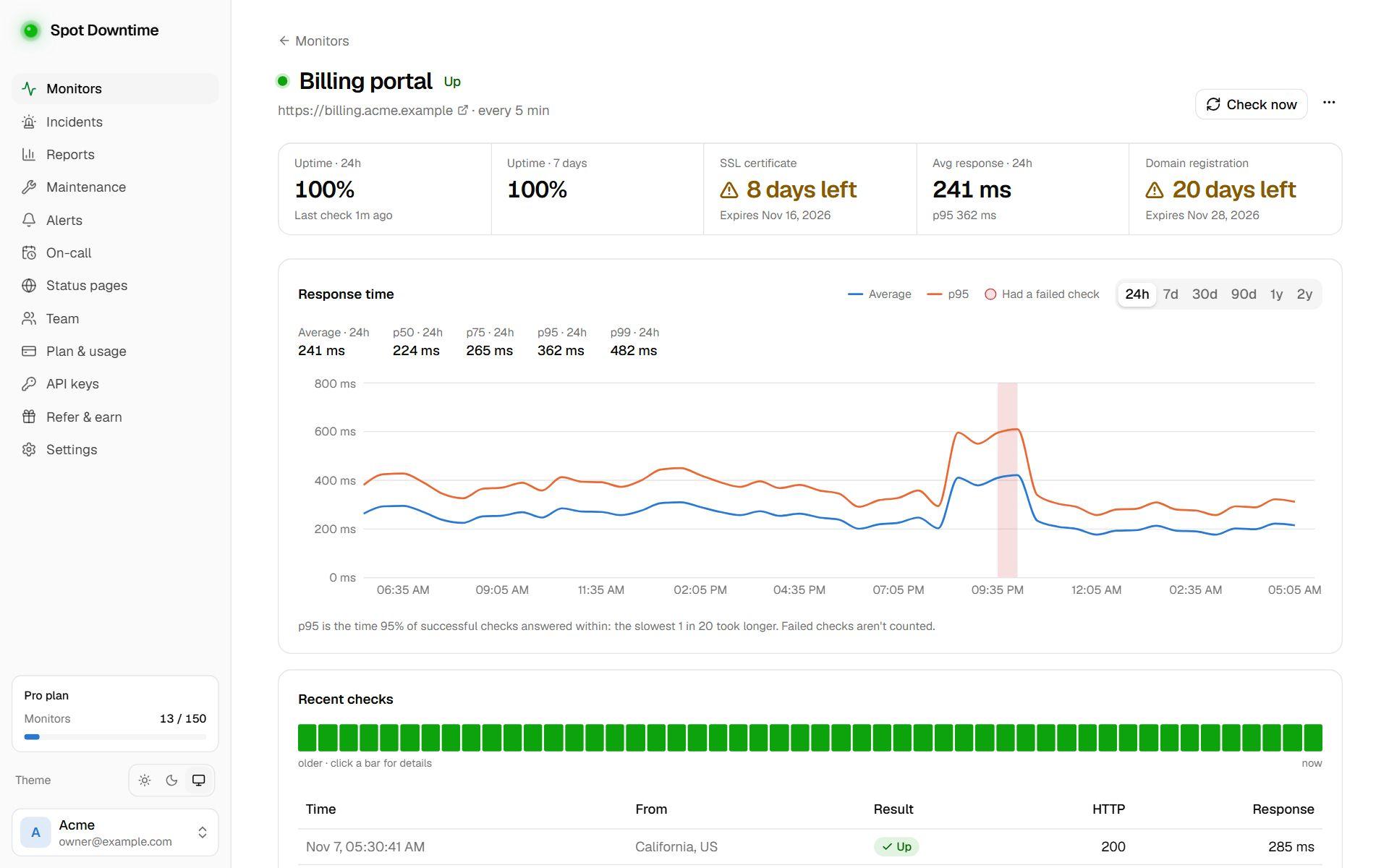
Every HTTPS website and API monitor reads the certificate the server presents on each check and records its expiry date, which you can see on the monitor's page. 14 days before expiry you get a warning through your alert channels, enough time to fix a broken renewal, with reminders at 7 days and 1 day if it still hasn't renewed. A renewed certificate is tracked automatically.
Certificates that are already broken, such as expired, issued for a different hostname or not trusted, make the check fail immediately, so they open an incident right away instead of waiting for a warning.
Nothing extra to set up
There's no separate monitor to configure: add a website or API monitor with an https:// address and its certificate is covered, on every plan including Free. Checks follow redirects, so the certificate checked is the one on the page your visitors end up on.
Add DNS monitoring to catch problems with the domain itself, and you'll cover the most common causes of a site that “just stopped working”.